


Standard Plates for Mold Housings
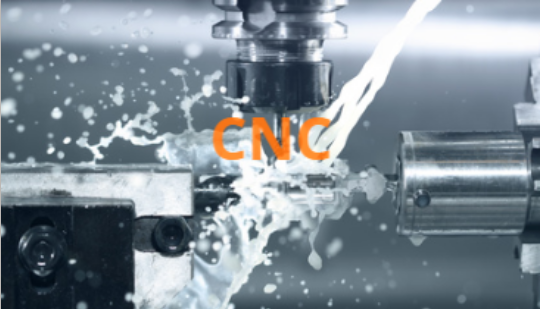
Our modern machine park with CNC machines ensures fast service for our clients, high precision, and top-quality components.
Of course, we also provide milling and grinding services for plates of any dimensions according to our clients’ individual requirements.
The measurement methods and control systems we use allow us to manufacture components of the highest quality. Mold housings are produced by our employees with great care and precision.
One of the most important elements of the production process is the injection mold, as the quality and aesthetics of the final part depend on it. Equally important is using the latest injection molding machine, which prepares the material for the final product.
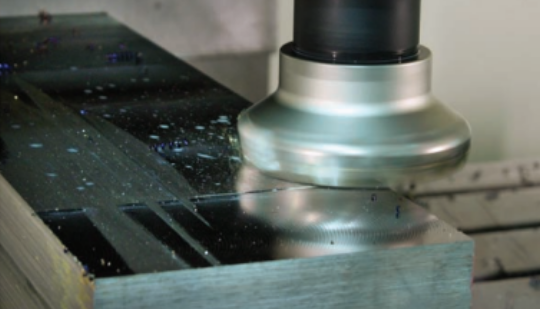
We offer attractive lead times for producing standard plates from 196×196 to 796×796. Our employees make every effort to ensure that your orders are fulfilled as quickly as possible while maintaining the highest quality.
Our consultants offer ready-made standard plates, available in our warehouses.
Don’t wait — check our offer in PDF.
Mold Housings for Injection Molds – What You Should Know
The production of injection molds is a multi-stage process. Even designing them requires great accuracy and attention to many critical factors. Various components are used for this purpose. Each injection mold must meet specific requirements and have precisely defined physical and chemical properties. Injection molds are widely used in producing various parts utilized across many industries. Depending on what is to be produced in the mold, it is necessary to create an appropriate design.
What is an Injection Mold Made Of?
An injection mold is a tool used during the process of injecting various materials. It is filled with the material in a liquid state to eventually obtain a solid product in a specific shape (exactly matching the mold). The mold consists of many elements: sprue bushing, centering ring, mounting plate, mold plate, core plate, support plate, ejector plate, spacer bar, foot, slots for clamping claws. The molded product perfectly replicates the cavity shape. Each injection mold consists of several functional systems: mold cavities, gating system, cooling system, ejection system, sprue, guiding and locating elements, plate and segment drives, housing.
The injection mold allows effective and even heat dissipation generated by the hot injected material. It is designed for easy removal of molded parts. Some molds consist of hundreds of components, all interdependent. Mold housings can have any shape, making them highly versatile. They can produce items ranging from combs to parts for RTV/household appliances and automotive components.
Types of Injection Molds and Their Materials
Steel is primarily used to produce injection molds due to its specific properties. Each design is individual, depending on the mold’s intended use. The injected material solidifies to take the cavity’s shape. It is crucial that molds are reusable and durable, which requires high-quality raw materials. Depending on the desired product, appropriate materials are selected. Mold housings are filled with various plastics. Structural carbon steel is mainly used for molds due to its machinability and high strength. It contains a significant amount of sulfur.
Tool steel is also used, resistant to cracking and high temperatures. Chromium and silicon are added to reduce oxidation susceptibility and improve fatigue strength. Materials used for molds are highly wear-resistant. Different types of injection molds are available: cold-runner and hot-runner molds with direct or indirect gates. Cold-runner molds are the most cost-effective, with a simple design. Their drawbacks include higher material usage for uniform filling and greater energy consumption to achieve the desired shape. Hot-runner molds generate no waste and operate quickly using heaters and thermocouples.
How Are Mold Housings Produced?
The complexity of an injection mold depends on its intended use. The first step is designing the part using 2D and 3D technology. Then the mold design is created based on the part design. The type of mold must also be chosen, which largely determines the subsequent production process. Once the mold design is finalized according to client specifications, it can be manufactured from metal. Often, injection molds are not built entirely from scratch. Many standard components are used, produced by various suppliers. Typically, only the cavities and non-standard parts are custom-made. Finally, testing is conducted, and the mold is refined.