


Uh Oh. Something is missing. Try double checking things.
Steel grade: BEARING STEEL
Steel for rolling bearings
Currently, the most common bearing steels are 100Cr6 and 100 Cr6, with the latter being equivalent to the former according to the PN-EN ISO 683-17 standard.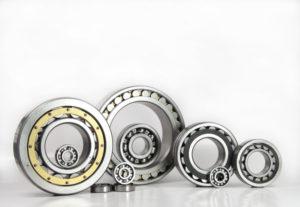 The appropriate properties of bearing steels result from their chemical composition. The alloy structure is based on the following elements:
- carbon
- chromium
- manganese
- silicon
Carbon in bearing steel
In alloy steels, carbon is important because of its effect on the hardness of the material. In alloy steel, the carbon content is around 1%. This ensures the required hardness. Thanks to this property, alloy steel is resistant to abrasion.
Chromium and the hardenability of steel
An important component of the alloy is chromium, which accounts for approximately 1.5%. The presence of significant amounts of chromium reduces the critical cooling rate, which increases the hardenability of steel. Furthermore, the interaction of chromium with carbon results in the formation of hard carbides. This not only increases the hardness of the entire alloy, but also inhibits the growth of austenite, regardless of the austenitizing time and temperature. In other words, chromium is responsible for the good fatigue strength and highly satisfactory impact strength of steel.
The importance of manganese
In the absence of chromium, manganese could cause grain growth, but in bearing steels, its effect is quite the opposite. Manganese dissolves in austenite, which increases the durability of the alloy. This has a direct positive effect on its hardenability. In addition, some of the manganese present in bearing steel combines with carbon to form carbides, which help to stop the growth of austenite grains. Manganese also increases the amount and stability of retained austenite. This is due to a reduction in the temperature for martensitic transformation, caused directly by manganese. Due to the increased amount of retained austenite, material deformation after hardening is insignificant, which allows for the production of even very large bearings.
Silicon – how does it affect the properties of bearing steel?
The last important component of bearing steel is silicon. Silicon affects martensite and increases its resistance to tempering. Usually, silicon causes a significant increase in grain size. However, in the case of bearing steel, this effect of silicon is inhibited by the presence of manganese. In addition, manganese also prevents hardening cracks, which often occur in materials containing silicon.
Heat treatment of bearing steel
Bearing steel is heat treated at 820–8400C. Hot oil is then used to cool the alloy. In addition, the material is also subjected to low tempering at a temperature of 1800C. These processes result in the formation of fine-grained martensite and small carbides. The hardness of bearing steel is around 62 HRC. The material also has very good fatigue strength.